How to Manage Hardscape Design Erosion Issues: Pillar Guide
The intersection of civil engineering, surface hydrology, and structural landscape architecture requires rigorous control over dynamic soil displacement forces. Across residential estates and commercial developments alike, exterior hardscape installations frequently alter natural watershed paths. Consequently, concentrated stormwater runoff targets vulnerable soil interfaces, causing sub-base washing, slope degradation, and structural undermining. Mitigating these destructive forces is paramount for long-term property stability.
Preserving exterior structural integrity demands an analytical approach that looks past superficial cosmetic repairs. Knowing how to manage hardscape design erosion issues requires careful evaluation of soil shear stress, localized flow velocities, aggregate particle size distribution, and sub-surface drainage pathways. Without a thorough understanding of these physical parameters, attempting to fix washouts through un-engineered surface patching will lead to recurring structural failures and escalating remediation expenses.
This analysis examines the multi-faceted architectural, engineering, and financial dimensions governing elite erosion control planning. By investigating granular soil mechanics, advanced watershed management strategies, and life-cycle resource maintenance, this guide provides a definitive reference for executing resilient, enduring landscape transformations.
Understanding “How to Manage Hardscape Design Erosion Issues”
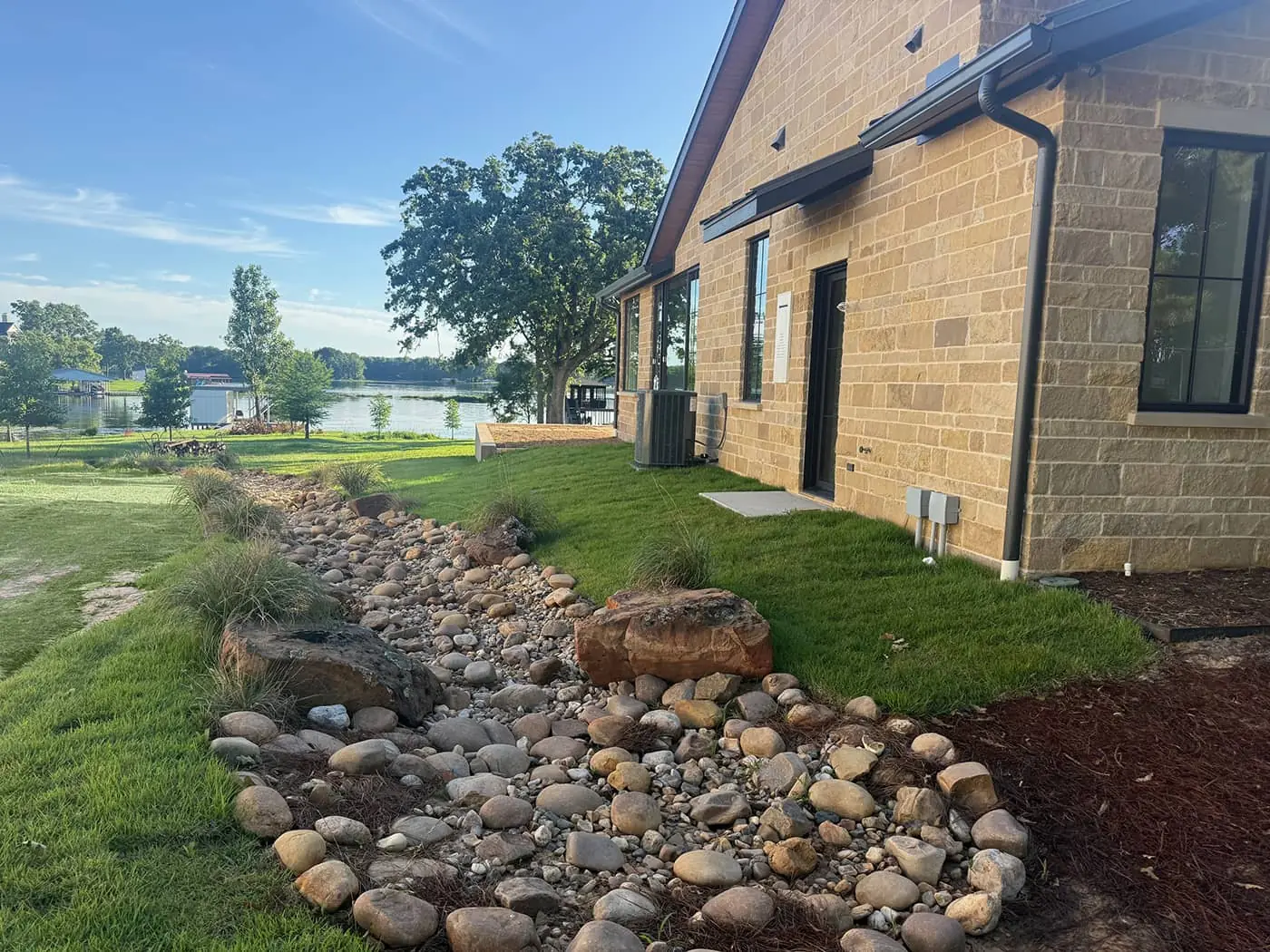
The phrase how to manage hardscape design erosion issues represents a complex synthesis of environmental engineering, hydraulic fluid dynamics, and geotechnical soil stabilization. Evaluating these systems requires moving beyond the visual allure of decorative gravel swales or basic turf installation. A frequent misconception among property owners is that a singular drainage pipe or uniform stone border can represent the absolute solution for stabilizing soil erosion across vastly different regional topographies and precipitation profiles.
Oversimplification in this discipline often stems from viewing erosion control as a purely reactive gardening chore rather than an engineered civil water management project. While promotional literature emphasizes immediate aesthetic fixes, mastering how to manage hardscape design erosion issues relies on understanding where hydraulic energy must be dissipated rather than merely redirected. Successful design strategies integrate open-graded aggregate velocity breakers, geotextile filtration fabrics, and subsurface retention cells directly into the core plan. Consequently, this neutralizes erosive water forces before structural sub-bases are compromised.
Another layer of complexity involves municipal stormwater regulations and watershed protection standards. Because hardscape surfaces prevent natural rainwater infiltration, municipal authorities enforce strict limits on peak runoff rates and off-site sediment discharge. Unmitigated runoff frequently triggers costly regulatory violations. Consequently, deploying effective strategies for how to manage hardscape design erosion issues requires balancing desired outdoor architecture with strict environmental compliance.
Deep Contextual Background
The historical development of erosion control engineering reflects broader shifts in civil infrastructure, municipal watershed management, and soil science. During early settlement eras, builders relied on rudimentary timber stakes, hand-piled fieldstone riprap, and basic surface sloping to manage runoff. These primitive methods prioritized immediate diversion over calculated hydraulic capacity, leading to frequent channel blowouts during major storm events.
As suburban expansion accelerated through the twentieth century, massive tracts of permeable land were paved over with concrete and asphalt. This rapid urbanization concentrated massive volumes of stormwater into narrow drainage corridors, causing severe stream-bank scouring and catastrophic residential slope failures. Early engineering responses frequently relied on rigid, unyielding concrete flumes that accelerated water velocities and worsened downstream erosion problems.
In the contemporary era, the discipline has matured into an intersection of high-precision hydrological modeling, bio-engineered stabilization fabrics, and sustainable urban drainage systems. Modern properties utilize modular permeable paving blocks, articulated concrete mattresses, and vegetated gabion basket systems. Today, elite developments rely on sophisticated engineering frameworks to control water movement, continuously refining how to manage hardscape design erosion issues through rigorous environmental science.
Conceptual Frameworks and Mental Models
Evaluating premier erosion mitigation frameworks benefits from structured analytical models isolating hydraulic, mechanical, and geological variables.
-
The Shear Stress and Permissible Velocity Model evaluates moving water force. It calculates the maximum water velocity an aggregate or soil bed can withstand before particle displacement occurs.
-
The Hydrostatic Pressure and Subsurface Drainage Matrix assesses trapped water accumulation. It maps how saturated backfill exerts lateral forces against retaining structures, ensuring continuous internal relief.
-
The Watershed Runoff Concentration Equation measures peak discharge volumes. It correlates rainfall intensity and catchment area to determine necessary pipe diameters and swale dimensions.
-
The Geotextile Filtration Retention Model maps soil separation parameters. It ensures water passes freely through filter fabrics while retaining fine soil particles to prevent sub-base piping.
Key Categories or Variations
Erosion control strategies span several distinct structural and bio-engineered typologies. Each presents specific trade-offs regarding material cost, hydraulic capacity, and aesthetic integration.
| Category | Typical Location Profile | Primary Structural Advantage | Key Operational Trade-Off |
| Articulated Concrete Block Mats | High-velocity drainage channels, steep slope toes | Flexible interlocking concrete units withstand extreme water shear stress. | Industrial aesthetic requires careful landscape buffering to blend with residential zones. |
| Gabion Basket Rock Structures | Severe stream banks, major grade transitions | High permeability, extreme flexibility under ground shifting, self-draining mass. | Wire baskets can corrode in aggressive chemical or salt-air environments over time. |
| Open-Graded Permeable Paver Systems | Driveways, flat courtyards, commercial plazas | Direct infiltration eliminates surface runoff concentration at the source. | Requires specialized aggregate maintenance and periodic vacuum sweeping to prevent clogging. |
| Vegetated Geogrid Slope Systems | Steep hillside cuts, major earth embankments | Combines high-tensile polymer grid strength with deep root reinforcement. | Requires establishment time for vegetation cover to reach full structural maturity. |
| Granite Riprap Energy Dissipators | Stormwater pipe discharge points, swale transitions | Heavy stone mass breaks up high-velocity water streams effectively. | Requires precise sizing calculations; oversized stone is difficult to integrate cleanly. |
Realistic Decision Logic
Selecting among these categories requires aligning the specific hydraulic energy profile, slope angle, and aesthetic goals of the property. Properties enduring high-velocity stormwater discharge must prioritize heavy granite riprap or articulated concrete mats to absorb kinetic energy. Conversely, gentle residential slopes benefit from vegetated geogrid systems and permeable paving matrices. Meanwhile, severe stream-bank erosion zones demand robust gabion basket installations.
Detailed Real-World Scenarios
Understanding how professional erosion control strategies function under environmental stress requires examining specific situational archetypes.
The High-Velocity Stormwater Discharge Chute
-
Operational Constraints: A commercial property where concentrated roof runoff discharges onto a sloping turf lawn, causing deep gully erosion.
-
Core Decision Points: Engineers install a stepped stone energy dissipator basin lined with geotextile fabric and heavy riprap to break water velocity.
-
Primary Failure Modes: Utilizing lightweight decorative gravel instead of graded riprap results in stone displacement and continued sub-base scouring during major storms.
-
Second-Order Effects: Proper energy dissipation transforms a destructive torrent of water into a controlled, harmless sheet flow.
The Saturated Hillside Patio Edge
-
Operational Constraints: A residential flagstone patio situated at the base of a saturated clay slope experiencing persistent sheet erosion.
-
Core Decision Points: Planners install a continuous French drain trench filled with clean crushed stone and perforated pipe along the patio perimeter.
-
Failure Modes: Omitting non-woven filter fabric allows surrounding clay to infiltrate the crushed stone, clogging the drain and flooding the patio.
-
Second-Order Effects: Comprehensive subsurface drainage collection routes groundwater safely away from foundational paving layers.
The Coastal Bluff Runoff Channel
-
Operational Constraints: A coastal estate managing intense wind-driven rain and aggressive runoff cutting down a sandy bluff.
-
Core Decision Points: Designers construct an articulated concrete block mat anchored deeply into the slope, allowing native grasses to root through openings.
-
Failure Modes: Standard unanchored paving stones slide down the sandy slope under heavy wave and rain action.
-
Second-Order Effects: Flexible block mats stabilize the shifting sand substrate while maintaining natural landscape aesthetics.
The Urban Driveway Runoff Basin
-
Operational Constraints: An urban residential driveway generating high volumes of impermeable surface runoff during intense summer cloudbursts.
-
Core Decision Points: Contractors excavate a subterranean exfiltration bed filled with open-graded aggregate beneath permeable interlocking concrete pavers.
-
Failure Modes: Failure to install a choker course layer allows fine sediment to wash into the open-graded stone, sealing the infiltration bed.
-
Second-Order Effects: Subsurface retention manages stormwater entirely on-site, preventing municipal storm sewer overloading.
Planning, Cost, and Resource Dynamics
Executing elite erosion control projects involves navigating complex financial structures extending far beyond basic material price tags. Total expenditures must account for heavy excavation, geotechnical engineering reviews, specialized geotextile materials, and massive aggregate delivery.
| Expense Category | Average Baseline Range | Primary Cost Drivers & Variability |
| Geotechnical & Hydrological Engineering | $2,500 to $7,500+ per project | Catchment area complexity; topographic survey precision; permit requirements. |
| Excavation & Earthmoving Machinery | $3,500 to $15,000+ per project | Volume of soil cut; site access constraints; slope steepness challenges. |
| Erosion Control Materials (Riprap, Gabions) | $4,000 to $20,000+ per project | Stone sourcing freight costs; custom wire basket fabrication; mat sizing. |
| Subsurface Drainage & Piping Networks | $2,000 to $8,000+ per project | Linear footage of trenching; diameter of perforated corrugated pipes. |
Opportunity Cost and Financial Nuance
The primary financial consideration in erosion management involves the high opportunity cost of deferred intervention. Ignoring minor rill erosion on a hardscape perimeter invariably leads to massive sub-base undermining, requiring the complete reconstruction of expensive patios and retaining walls. Property owners must evaluate erosion control as essential asset protection rather than a superficial landscaping expense.
Tools, Strategies, and Support Systems
Navigating the execution of complex erosion control blueprints requires systematic tools and professional partnerships that bypass basic trial-and-error limitations.
-
Manning’s Equation Calculators and Hydraulic Flow Software determine exact pipe sizing and open-channel velocity limits.
-
Non-Woven Geotextile Fabrics provide high-tensile soil separation and water filtration capabilities.
-
Laser Transits and RTK GNSS Surveying Equipment verify precise swale gradients and positive drainage slopes.
-
Heavy Track Excavators and Trenchers handle challenging earth-moving tasks on restricted residential and commercial footprints.
-
Plate Compactors ensure that backfill soils achieve maximum density around newly installed drainage structures.
-
Professional Civil Engineering Guild Networks supply vetted design data for complex watershed management scenarios.
Risk Landscape and Failure Modes
Even meticulously planned erosion mitigation systems remain vulnerable to systemic environmental and installation failures over time.
-
Geotextile Clogging: Fine silts and clay particles blocking non-woven filter fabric pores, halting water filtration and causing hydrostatic blowouts.
-
Undercutting at Structure Terminations: Water scouring the unprotected soil immediately downstream of a riprap apron or concrete flume.
-
Pipe Joint Separation: Un-glued or un-collared corrugated drainage pipes shifting apart under heavy soil settling, leaking water into sub-bases.
-
Surface Overflow Erosion: Extreme storm events exceeding design capacity, causing water to bypass swales and carve new destructive channels.
Governance, Maintenance, and Long-Term Adaptation
Maintaining elite structural and hydraulic standards across erosion-prone hardscapes requires disciplined operational governance and seasonal maintenance cycles. Environmental weathering, sediment accumulation, and organic debris buildup gradually reduce drainage capacity. Therefore, property management must adhere to formal inspection protocols. Spring debris clearings from catch basins, annual CCTV camera inspections of subterranean drain lines, and periodic aggregate replenishment preserve system integrity.
This proactive governance model ensures that high-impact drainage swales and retaining structures undergo targeted restorative maintenance rather than catastrophic overhauls. Regular checks of outfall aprons and filter fabrics prevent minor water routing issues from escalating into major structural washouts.
Measurement, Tracking, and Evaluation
Assessing the ongoing performance of erosion control infrastructure involves monitoring objective hydrological metrics alongside qualitative environmental indicators.
-
Leading Indicators: Post-storm outfall flow clarity, absence of standing sediment in catch basins, and stable laser-verified swale gradients.
-
Lagging Indicators: Total absence of sub-base settling beneath pavers, zero soil loss along retaining wall perimeters, and sustained structural plumbness.
-
Qualitative Signals: The clear, undisturbed appearance of landscape beds adjacent to hard surfaces following heavy rainfall events.
Common Misconceptions and Oversimplifications
-
Myth: Standard black plastic landscape sheeting works effectively as a subsurface drainage filter fabric. Correction: Plastic sheeting is impermeable; it traps water, builds up hydrostatic pressure, and accelerates soil sliding rather than stabilizing it.
-
Myth: Riprap stone can simply be dumped onto an eroding slope without a geotextile underlayment. Correction: Without a supporting filter fabric, moving water will wash underlying soil particles through the stone voids, causing the riprap to sink and fail.
-
Myth: French drains never require cleanout ports or ongoing maintenance. Correction: Silt, roots, and organic debris inevitably enter subterranean pipes, requiring accessible cleanout ports for periodic high-pressure jetting.
-
Myth: Flat hardscape patios do not generate significant runoff erosion issues. Correction: Impermeable patios concentrate 100% of falling rainwater, turning modest storms into high-velocity streams directed at surrounding unprotected soil beds.
Ethical, Practical, and Contextual Considerations
Beyond pure structural mechanics and financial metrics, erosion management must respect environmental boundaries and municipal watershed ethics. Concentrating stormwater runoff and dumping it onto adjacent lower properties violates civil liability laws and damages local aquatic ecosystems. Therefore, ethical site design mandates that all concentrated hardscape runoff is attenuated, filtered, and infiltrated safely on-site. Furthermore, preserving natural riparian buffers protects regional waterways from sediment pollution and preserves native ecological habitats.
Conclusion
The successful management of exterior water dynamics requires navigating a sophisticated intersection of civil engineering, fluid mechanics, and geotechnical construction craft. True landscape durability is achieved not through temporary cosmetic patches, but through rigorous attention to hydraulic energy dissipation, subsurface filtration physics, and structural drainage networks tailored to regional precipitation profiles. By looking past short-term aesthetic trends and evaluating erosion risks through comprehensive structural frameworks, property owners can establish permanent, resilient landscapes that eliminate environmental hazards while elevating long-term property value.